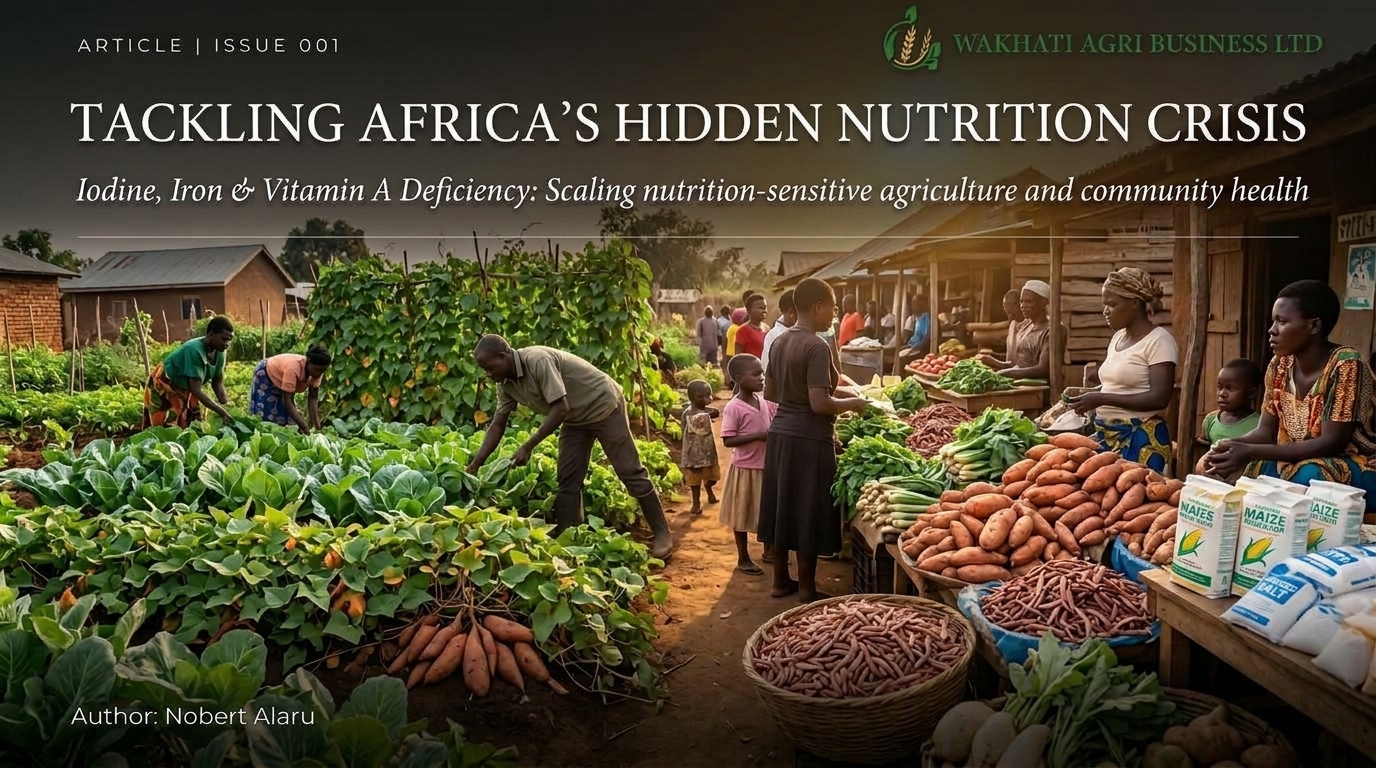
Tackling Uganda’s Hidden Nutrition Crisis: Iodine, Iron & Vitamin A Deficiency
Micronutrient deficiencies remain one of the most urgent yet overlooked public health challenges in Uganda. According to the World Health Organization, iodine, iron, and vitamin A are the three nutrients most lacking among children and pregnant women in developing countries, and Uganda continues to feel this burden.
Why it matters
- Iron deficiency drives high rates of anemia, affecting nearly half of children under five.
- Vitamin A deficiency weakens immunity and increases child mortality.
- Iodine deficiency threatens cognitive development and maternal health.
These deficiencies silently undermine learning, productivity, and long‑term national development.
The Gaps Holding Us Back
Despite national policies, several challenges persist:
- Weak enforcement of food fortification laws
- Inconsistent micronutrient monitoring
- Low adoption of biofortified crops
- Rural communities still lack dietary diversity
- Fragmented nutrition programs with limited last‑mile reach
Uganda has made progress: salt iodization, vitamin A supplementation, and fortified foods. However, implementation remains uneven.
How Wakhati Agri Business Ltd positions itself to contribute to filling the above gaps
Wakhati Agri Business Ltd is uniquely positioned to close the last‑mile gap. At Wakhati, opportunities include:
1. Scaling Nutrition‑Sensitive Agriculture
- Promote biofortified crops (iron‑rich beans, vitamin A sweet potatoes)
- Expand household and school nutrition gardens
2. Strengthening Community Nutrition Education
- Integrate nutrition messaging into extension services
- Train caregivers, youth, and school communities
3. Improving Access to Nutritious Foods
- Support seedling production for nutrient‑dense vegetables
- Build market linkages for farmers
4. Supporting Policy Implementation
- Advocate for stronger fortification compliance
- Participate in district nutrition coordination platforms
📣 Call to Action
Uganda cannot afford to lose another generation to preventable deficiencies.
We need stronger policy enforcement, community‑driven nutrition programs, and collaboration across sectors.
“Three nutrients. Millions at risk. Let’s end micronutrient deficiency in Uganda and the globe at large.”